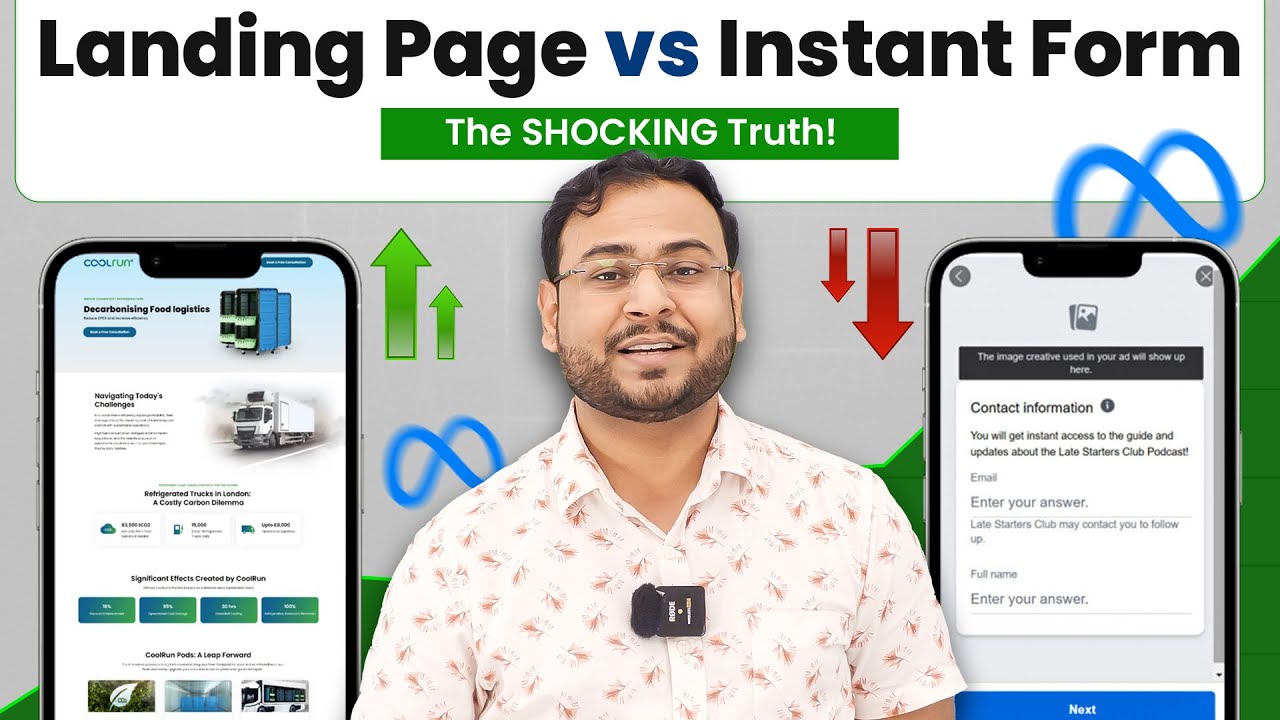
Facebook Instant Forms and landing pages can both generate real estate leads.
Facebook Instant Forms and landing pages can both generate real estate leads, but they serve different purposes. Instant Forms let prospects submit their details directly inside Facebook or Instagram, making enquiries quick and convenient. Landing pages take prospects to a separate website page where they can explore a property, review details, and complete a more focused enquiry form.
For real estate businesses, the right choice depends on the campaign objective, property information, lead quality requirements, and sales team's follow-up process. Instant Forms often suit early-stage enquiries and mobile campaigns, while landing pages can work better when buyers need detailed information before contacting an agent. A combined approach can capture both types of prospects.
How Facebook Instant Forms Work for Property Enquiries
Facebook Instant Forms allow users to share their contact details without leaving the social media platform. When someone clicks an advert promoting a property, valuation, viewing, or property consultation, a form opens with fields that may already contain information from their profile.
This shorter process reduces the steps between seeing an advert and submitting an enquiry. It can be useful when a property campaign targets people browsing on mobile devices or when the main objective is to collect callback requests.
However, a completed form does not automatically indicate serious buying interest. Some users submit details quickly, misunderstand the advert, or are not ready to speak with an estate agent.
When Instant Forms Are Most Useful
Property valuation requests.
New development interest lists.
Viewing and callback requests.
General buyer and seller enquiries.
Rental property enquiries.
How Landing Pages Generate Real Estate Leads
A landing page gives a property campaign its own dedicated destination. Instead of opening a form inside Facebook, the advert directs visitors to a website page containing property information, images, descriptions, location details, and an enquiry form.
This approach gives prospective buyers more context before they share their information. It also allows estate agents to explain property features, display related listings, and answer common questions on the same page.
Landing pages require more effort from visitors because they must leave the social platform, wait for the website to load, review the content, and complete the form. Poor mobile design or slow loading can cause people to leave before enquiring.
When Landing Pages Are Most Useful
Promoting individual property listings.
Advertising luxury or high-value developments.
Explaining new-build projects.
Capturing enquiries for property investment opportunities.
Providing detailed information about an estate agency's services.
Which Lead Generation Method Fits Each Real Estate Campaign
The two methods support different stages of the property enquiry journey.
Facebook Instant Forms: Keep the submission process within Facebook or Instagram. They are useful for quick callback requests, property valuation enquiries, and campaigns where convenience is important.
Landing Pages: Give visitors more space to review property descriptions, images, features, and location details. They are useful when prospects need more information before submitting an enquiry.
Lead qualification: Instant Forms collect answers through form fields, while landing pages can explain questions in greater detail and support more extensive enquiry processes.
Mobile experience: Instant Forms provide a familiar social media experience. Landing pages depend on website speed, mobile layout, and form usability.
Tracking: Instant Forms use Meta lead reporting and supported integrations. Landing pages can provide additional website analytics, including page visits and form completion activity.
Main limitation: Instant Forms offer less room for detailed property information, while landing pages introduce extra steps that may cause some visitors to leave.
Neither method guarantees better leads. Campaign results depend on the advert, audience, property offer, form design, and follow-up process.
Technical Factors That Affect Lead Quality
The lead generation method is only one part of the system. Accurate tracking, reliable data transfer, and prompt follow-up also influence campaign performance.
The main technical components include:
Meta Instant Forms: Collect contact details and property qualification answers directly through Facebook or Instagram.
Meta lead integration: Transfers form submissions into a connected CRM or application.
Website enquiry forms: Capture information from visitors who submit details through a landing page.
Meta Pixel: Helps measure supported website actions and visitor activity.
Conversions API: Sends eligible event data from a business server to Meta when correctly configured.
Field mapping: Ensures each enquiry answer appears in the correct CRM field.
CRM integration: Stores contact information, campaign sources, and follow-up records.
Conversion reporting: Tracks form submissions, qualified conversations, and viewing appointments.
Meta's Business Help Centre explains different Instant Form experiences, including higher-intent forms with a review step. This can help reduce accidental submissions, although it does not guarantee that every lead is qualified.
Google's Core Web Vitals documentation explains how loading performance, responsiveness, and visual stability affect user experience. These factors matter when a real estate campaign sends visitors to an external landing page, especially on mobile connections.
Why Real Estate Lead Quality Matters More Than Submission Volume
A campaign that produces many enquiries may still create little value if most prospects cannot be contacted or do not match the property requirements.
Estate agents should measure the full journey rather than stopping at the number of submitted forms. Track:
Valid contact details.
Successful conversations.
Buyer or seller qualification.
Viewing appointments.
Enquiries progressing to serious negotiations.
For example, a campaign promoting a property in Birmingham should ask whether the prospect is interested in that location, whether the property matches their requirements, and whether they want to arrange a viewing. A general form submission alone cannot answer these questions.
Things to Consider Before Choosing a Lead Generation Method
Evaluate the campaign before deciding which format to use.
Property complexity: A simple viewing request may need a short form, while a development with several property types may require a detailed landing page.
Audience readiness: People casually browsing property listings may respond differently from prospects actively arranging viewings.
Mobile experience: Test the complete journey on mobile devices, not just desktop computers.
Lead qualification: Decide which details agents need before accepting an enquiry.
CRM integration: Confirm that every submission reaches the correct pipeline with its campaign source.
Follow-up capacity: Make sure the sales team can respond to the volume and type of enquiries generated.
Privacy and consent: Explain how personal information will be used and follow applicable data protection and advertising requirements.
How LastingSales Supports Real Estate Lead Management
LastingSales offers services relevant to property enquiries and sales workflows:
Leadly AI Agent: Supports initial conversations, answers approved questions, and collects information to help qualify incoming property enquiries.
Mobile CRM: Helps agents access prospect details, track conversations, assign leads, and organise follow-up tasks.
Property / Real Estate: Supports the management of property enquiries and communication with prospective buyers and tenants.
Marketing Agencies: Helps organise campaign-generated enquiries and maintain consistent lead management processes.
Common Questions About Real Estate Lead Campaigns
Can Facebook Instant Forms collect property preferences?
Yes. Forms can include relevant questions about property type, preferred location, and viewing interest. Keep questions focused on information that helps the agent respond appropriately.
Can a landing page connect directly to a real estate CRM?
Yes. A website form can transfer enquiry details to a CRM through a supported integration, API, or automation platform. Test field mapping and duplicate handling before launching the campaign.
Should every property advert use the same form?
No. Adapt the form to the property and campaign objective. A rental enquiry may need different questions from a new-build development or seller valuation campaign.
Can both methods run in the same campaign strategy?
Yes. Use Instant Forms for quick enquiries and landing pages when visitors need more property information. Compare qualified outcomes rather than submission totals alone.
How to Improve Real Estate Lead Campaigns Over Time
How can agents identify where prospects abandon a landing page?
Review analytics for page visits, form starts, form completions, and device performance. Test the page on different screen sizes and check whether visitors encounter slow loading, unclear information, or unnecessary form fields.
Should property images be included on landing pages?
Yes. Use accurate, relevant images that represent the advertised property. Keep image quality suitable for mobile viewing and avoid visuals that could misrepresent the property's condition or features.
How should duplicate property enquiries be handled?
Use CRM matching rules based on reliable contact details and property interest. Merge or link duplicate records carefully so agents retain the complete conversation history.
When should a real estate campaign change its lead generation method?
Review the method when qualified enquiries remain low despite improvements to the advert, audience, form, and follow-up process. Test the alternative format with a comparable audience and campaign objective before making a permanent change.
Choose the Method That Matches Your Property Campaign
Facebook Instant Forms make it easier for prospects to submit quick enquiries, while landing pages provide more space to explain properties and collect detailed information. The strongest option depends on the audience, property type, qualification requirements, and sales team's ability to follow up.
For information about real estate lead management and CRM workflows, contact LastingSales at info@lastingsales.com or +44 7507 30 5610. Evaluate campaign performance through qualified conversations and viewing opportunities, then choose the approach that supports long-term sales goals.